District extension offices
Twenty-two district aquaculture extension offices deliver licensing, advisory, and service coordination support island-wide.
NAQDA is the statutory authority established under Act No. 53 of 1998 to develop aquaculture and inland fisheries in Sri Lanka. It operates under the Ministry of Fisheries, Aquatic and Ocean Resources and provides public services that support food security, export-oriented aquaculture, sustainable resource management, and community livelihoods.
Established 1998
Statutory authority under Act No. 53 of 1998
At a glance
NAQDA provides official services for aquaculture and inland fisheries development, including training and extension advice, fish seed supply, licensing and permits, technical support, investment facilitation, and export-oriented sector support.
Twenty-two district aquaculture extension offices deliver licensing, advisory, and service coordination support island-wide.
Services include training, extension advice, fish seed supply, licensing, import and export permits, and technical support.
NAQDA’s objectives include sustainable management and conservation of aquatic resources, good governance, and accountability.
 Office of the Chairman
To promote sustainable and responsible aquaculture practices that ensure national food security, support export growth, provide innovative and efficient sector services, and empower communities through capacity building and technical support.
NAQDA's governance is defined by the National Aquaculture Development Authority of Sri Lanka Act, No. 53 of 1998, as amended by the (Amendment) Act, No. 23 of 2006. The chart below shows the statutory chain of accountability — from the subject Minister, to the Board of Directors, to the Director-General, and the operational network.
Sets policy, issues general and special directions, may order investigations, and makes regulations.
Act ss. 27–29 & 37Vested with the administration, management and control of the affairs of the Authority. Chaired by a Chairman appointed by the Minister from among the Directors.
Act s. 3 (amended 2006) · Chairman s. 5(7)Appointed by the Board as chief executive; responsible for implementing Board decisions. Attends and speaks at Board meetings but does not vote.
Act s. 13 · s. 6(4) added 2006Five divisions under the Director-General, headed by Directors (Act s. 12(k))
Inland aquaculture and culture-based fisheries in reservoirs and tanks — fingerling stocking, breeding and freshwater production.
Brackish-water and marine aquaculture — shrimp, sea cucumber, crab, seaweed and mariculture along the coast.
Farmer training, technical advice and knowledge transfer delivered through the district office network.
Financial management, accounts and procurement, and administration of the Authority's Fund under the Act.
Staffing, capacity building, general administration and institutional development.
Field network & statutory officers
District Aquaculture Extension Offices delivering NAQDA services to inland and coastal fish farmers island-wide.
National Aquaculture Development Centres, breeding centres and hatcheries producing fish seed, broodstock and fingerlings.
Officers nominated to exercise licensing powers introduced by the 2006 amendment (ss. 14A–14B).
Divisional structure per NAQDA Annual Reports (2021–2022); governance per Act No. 53 of 1998 as amended by Act No. 23 of 2006.
Current statutory composition under Section 3, as substituted by Act No. 23 of 2006
Appointed Directors — five (5)
Persons of integrity with wide experience and proven ability in inland fisheries and aquaculture, science and technology, industry, commerce, finance, administration or law — appointed by the Minister for a three-year term.
Ex-officio Directors — eight (8)
The Board meets at least monthly with a quorum of five (Act s. 6). Individual office-holder names change over time and should be confirmed from official NAQDA or ministry notices.
Act No. 23 of 2006 (the "new" Act) analysed against the original 1998 enactment
Sections 11 & 12 of the Act
Functions (s. 11)
Powers (s. 12)
Legal basis: initial capital Rs. 50 million (s. 21); the financial year is the calendar year (s. 24); accounts are audited under Article 154 of the Constitution (s. 25). Where the Sinhala and Tamil texts are inconsistent, the Sinhala text prevails (s. 40).
NAQDA is a statutory authority established by Act No. 53 of 1998 and operates under the Ministry of Fisheries, Aquatic and Ocean Resources. Current office holders should be verified from official NAQDA or ministry notices.
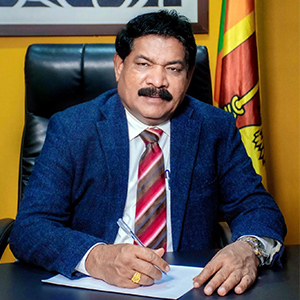
Minister of Fisheries, Aquatic and Ocean Resources.
Official ministry portrait Ministry profile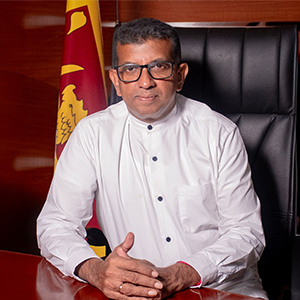
Deputy Minister of Fisheries, Aquatic and Ocean Resources.
Official ministry portrait Ministry profile
Chairs the Board of Directors and supports the Authority's statutory governance.
Portrait available in project mediaImplements Board decisions and directs the operational work of the Authority.
Awaiting verified appointment detailsMinister and Deputy Minister details were verified against the official Ministry of Fisheries website on 14 July 2026. NAQDA office-holder details must be confirmed from an official NAQDA publication before release.
The authority delivers aquaculture and inland fisheries development services through its head office, district extension offices, and national service centres.
Includes advisory support and training through NAQDA service channels.
Fish seed supply is provided through Aquaculture Development Centres and related services.
Includes aquaculture licensing and import/export permit services.
Includes disease, water-quality, investment, and export-promotion guidance.
The official institutional direction of the National Aquaculture Development Authority.
To be the leading aquaculture service provider in South Asia, contributing to national food security and economic prosperity through sustainable and export-oriented aquaculture.
To promote sustainable and responsible aquaculture practices that ensure national food security, support export growth, provide innovative and efficient sector services, and empower communities through capacity building and technical support.
This section keeps to information available from official NAQDA, Ministry and legal sources.
Key milestones in NAQDA's history and recent achievements, drawn from official public sources.
Parliament established the National Aquaculture Development Authority of Sri Lanka.
NAQDA commenced work as the national authority for aquaculture and inland fisheries development.
Reconstituted the Board of Directors, introduced Licensing Officers and a duty to submit annual reports.
Inland fishery management regulations published in Gazette Extraordinary No. 1733/24.
Upgraded hatchery and live fingerling bowsers handed over at the Inginiyagala Aquaculture Development Centre, Ampara — under a US$3 million Japan-funded, FAO-implemented project.
Joint marine ornamental fish research established at the Kusala Bangadeniya Centre.
Recent, verifiable achievements supporting Sri Lanka's fishing communities.
Concessionary finance disbursed to 1,772 beneficiaries at a 4% government interest subsidy (Phases 1 & 2).
SAARC Development Fund initiative supporting small-scale aquaculture households across the country.
Strengthening four NAQDA Aquaculture Development Centres and community mini-hatcheries for fingerling production.
Sources: NAQDA Act No. 53 of 1998 & Amendment No. 23 of 2006; Gazette 1733/24; Embassy of Japan (26 Mar 2025); SAARC Development Fund; NAQDA.
Contact NAQDA through the verified head-office channels or use the centres page to find service locations.
National Aquaculture Development Authority — 41/1, New Parliament Road, Pelawatte, Battaramulla, Sri Lanka. Operating under the Ministry of Fisheries, Aquatic and Ocean Resources.